For many people, an olive tree is more than a distinctive garden plant. Its long life, useful fruit and presence in ancient stories have made it a symbol of continuity, peace and abundance. Those meanings can enrich a planting choice when paired with a realistic care plan.
Longevity and continuity
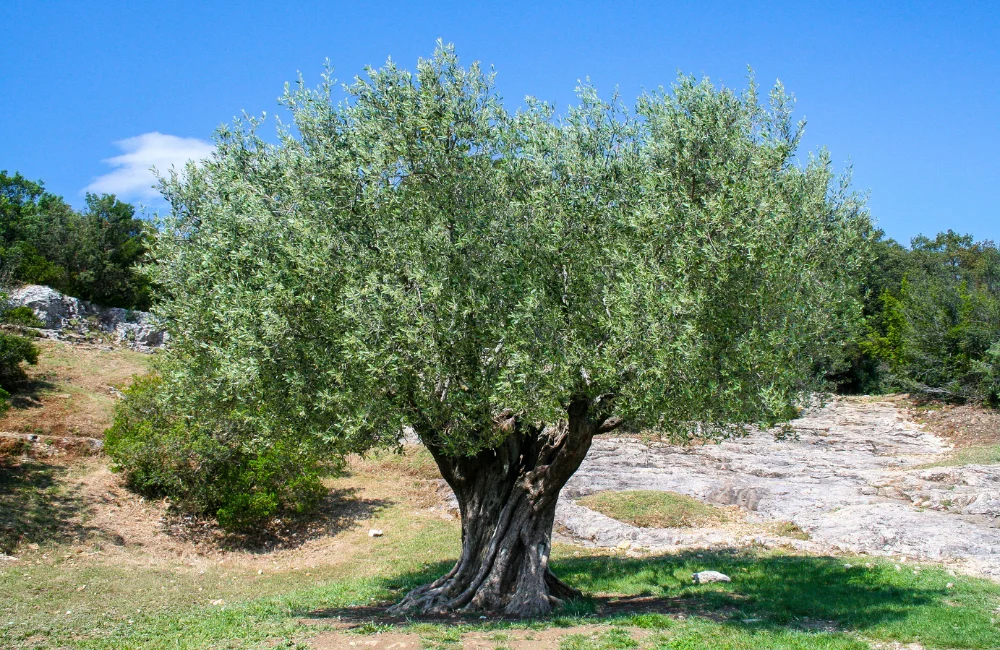
Some olive trees can live for centuries, and exceptional specimens are much older. This capacity has made the tree an image of endurance and a link between generations. Age must be documented for an individual tree; a twisted trunk alone is not a reliable certificate of its years.
Mediterranean roots
The cultivated olive is closely associated with Mediterranean landscapes and long histories of food, oil and everyday use. Olive cultivation is associated with Greece, Italy and Spain and with ancient cooking, lighting and ritual. The tree’s precise origin and earliest cultivation remain subjects of research.
Athena and the olive tree
In Greek mythology, Athena’s gift of an olive tree is contrasted with Poseidon’s gift in the story of Athens. The story associates the tree with wisdom and a resource that serves a community.
Victory, peace and prosperity
Olive branches and wreaths have carried meanings of honor and peace in different periods. The ancient Olympic victor received a wild-olive wreath, or kotinos. In a home, an owner may choose the tree for its form and these associations, but planting it does not itself cause prosperity.
Feng shui as a belief
In some feng shui interpretations, an olive tree represents calm, balance and prosperity. East or southeast placement may carry symbolic meaning for an owner. Practical light, drainage and safe space should guide the actual location; planting a tree does not produce a measurable financial result.
Care behind the symbolism
Give the tree adequate light and a free-draining root zone. Check moisture before watering and prune deliberately for shape and airflow. Choose fertilizer for demonstrated need and follow the product label. These points matter regardless of the meaning that an owner attaches to the tree.
Choosing an individual tree
Olive De Casa can discuss available forms, sizes and preparation histories. Ask about the actual tree and what help can be arranged for your location. An imported tree’s history and a site’s conditions are more useful than a general promise of long-term vigor.
Frequently asked questions
Is an olive tree truly “immortal”?
No. The term reflects exceptional longevity and the ability of some trees to resprout after damage. It is not a promise that a particular tree cannot die.
Which direction is auspicious in feng shui?
East and southeast may be chosen for symbolic reasons. If those positions lack the tree’s required light or drainage, select a healthier site.
What does an olive tree cost, and which variety is popular?
Cost depends on the individual tree’s size, age evidence, form and preparation. Choose a variety for its form and site suitability rather than popularity. See the buyer guide and ask about current stock.
For a focused example of victory and honor, read about the olive wreath at the ancient Olympic Games.