A mature olive tree can be a strong visual feature, but its care routine must respond to the actual tree and planting site. Review drainage, light and moisture together, then adjust nutrition and pruning to its condition rather than a fixed calendar.
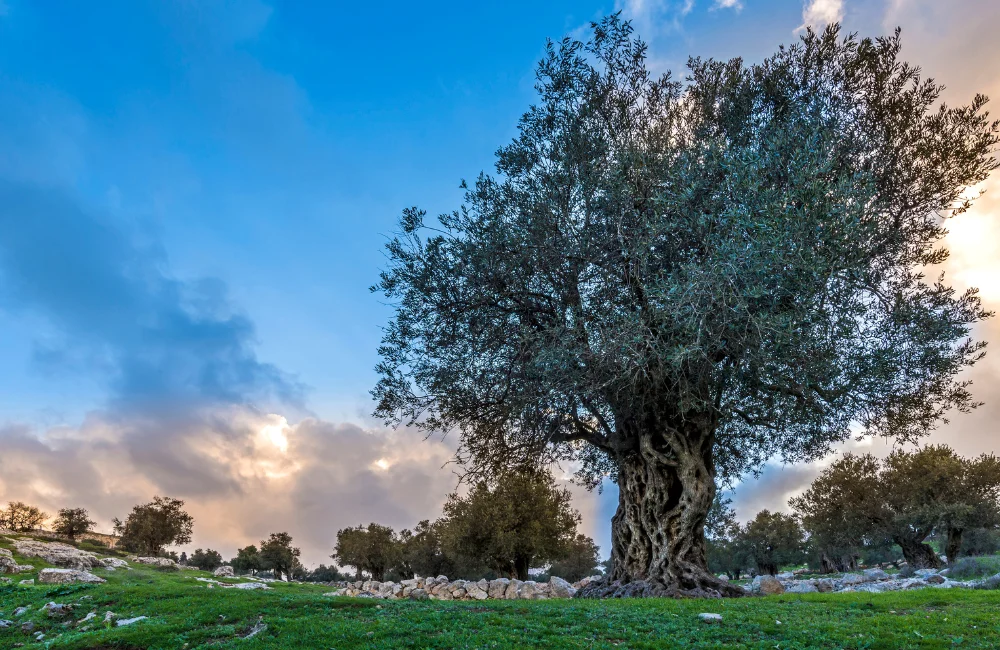
Four foundations of care
1. Prepare a free-draining root zone
Olive roots need air as well as water. Use a growing medium and planting position that let excess water leave; a single added ingredient cannot compensate for blocked container holes or a bed that collects rain. In a wet site, assess grading and drainage before planting. Our soil article explores the medium in more detail.
2. Water according to moisture and weather
Check the root zone before watering. When water is needed, apply it thoroughly and let excess drain. A pot, a newly planted tree and an established tree in the ground will not share one weekly schedule. Reduce supplemental watering after rain and investigate standing water. The root-rot guide explains warning signs without assuming a diagnosis.
3. Feed only when appropriate
Assess growth, soil or growing medium and the product label before selecting fertilizer. An overly vigorous or stressed plant does not automatically need more nutrients. Avoid application to very dry soil or during unsuitable weather and ask a qualified local specialist about the individual tree.
4. Prune with a purpose
Remove dead or damaged growth and manage crossing branches and shape where needed. Opening an overcrowded canopy can improve light and airflow, but heavy or badly timed cuts can harm a tree. The pruning article covers the reasons in more detail.
Why preparation and provenance matter
Ask about the individual tree’s condition, root system, recent movement and acclimatization history. A change of site can stress a tree; no preparation process guarantees that every tree establishes quickly or remains disease-free. Plan placement, handling and follow-up for the exact specimen.
Selecting with Olive De Casa
Discuss form, roots, preparation, placement and aftercare with the Olive De Casa team. Ask which trees are currently available, what has been done to each one, and which delivery, planting and follow-up services can be arranged for your site.
Summary
Start with drainage and suitable light, check moisture before watering, feed for a demonstrated need and prune deliberately. Review a tree’s history and the site together so that the care plan can change as conditions change.
Frequently asked questions
How often should I water?
There is no reliable two-or-three-times-per-week rule for every olive tree. Check moisture in the root zone and adjust for container size, soil, weather, rainfall and establishment.
Can an olive tree grow in a pot?
Yes, if the pot is sized for the tree and drains properly. Review root room, weight, safe movement and available light.
What fertilizer and how often?
Choose a product and rate for the tree’s condition and follow its label; ask for a local assessment when unsure. There is no single interval for every tree and container.
Why are leaves yellowing or falling?
Possible causes include excess or insufficient water, poor drainage, light changes, root damage and disease. Inspect conditions before treating a presumed cause.
Can an olive tree grow in a warm, humid climate?
It can, but suitability depends on the individual tree, drainage, light and care. Plan for heavy rainfall and monitor the root zone during wet periods.