Soil pH describes how acidic or alkaline a soil is. It affects the availability of some nutrients, but it is one part of plant care alongside drainage, moisture, light and the growing medium’s structure.
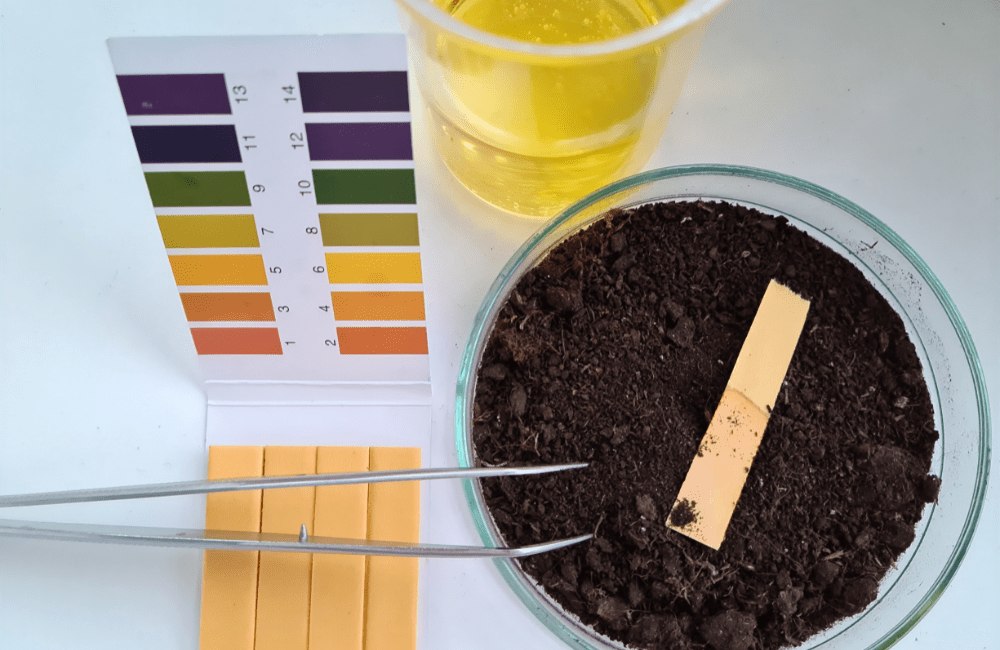
Reading the pH scale
The scale runs from 0 to 14. Seven is neutral, lower numbers are acidic and higher numbers are alkaline. Different plants have different tolerances. No single pH range is a target for every species or every soil. The Penn State Extension soil pH guide explains why testing and plant-specific targets matter.
Why it matters
pH influences how nutrients are available to roots. A result far outside a plant’s suitable range may contribute to poor growth or yellow leaves, although those signs can also have other causes. Measuring pH is more useful than diagnosing the cause from leaf color alone.
Test before changing the soil
Take representative samples from the relevant planting area and use a reliable test. For a valuable or struggling tree, a laboratory soil test can give more information. Read pH alongside texture, drainage, salts and nutrient results. A potting mix and in-ground soil can behave differently. Recheck after an amendment has had time to work.
Ways pH may be adjusted
Agricultural lime can raise pH in acidic soil, while elemental sulfur can lower pH in suitable situations. The material and amount should follow a soil-test recommendation and consider soil type; do not apply a guessed dose close to roots. Mature compost can improve soil structure but is not a precise pH control. Water quality and fertilizer choices can also influence a growing medium over time.
What about olive trees?
The suitable pH for an olive tree depends on the soil, cultivar and growing conditions. In practice, first avoid waterlogged roots and test the actual planting medium. If the result is unusual or a tree is declining, ask for a site-specific recommendation before adding lime or sulfur. The RHS olive-growing guide also emphasizes free-draining soil.
Frequently asked questions
What pH should I aim for with an olive tree?
Do not select a single number without a test and site context. Consult a local soil test and the tree’s condition, with drainage a priority.
What happens when pH is unsuitable?
Nutrient availability can change, and growth or foliage may suffer. Similar symptoms can come from watering, roots or other stresses, so inspect the whole plant and growing medium.
Can eggshells change soil pH?
Ground eggshells contain calcium carbonate, but their effect is slow and unpredictable. Use a soil test and a measured amendment when a pH change is needed.
Related: Choosing soil for olive trees and Perlite in potting soil.