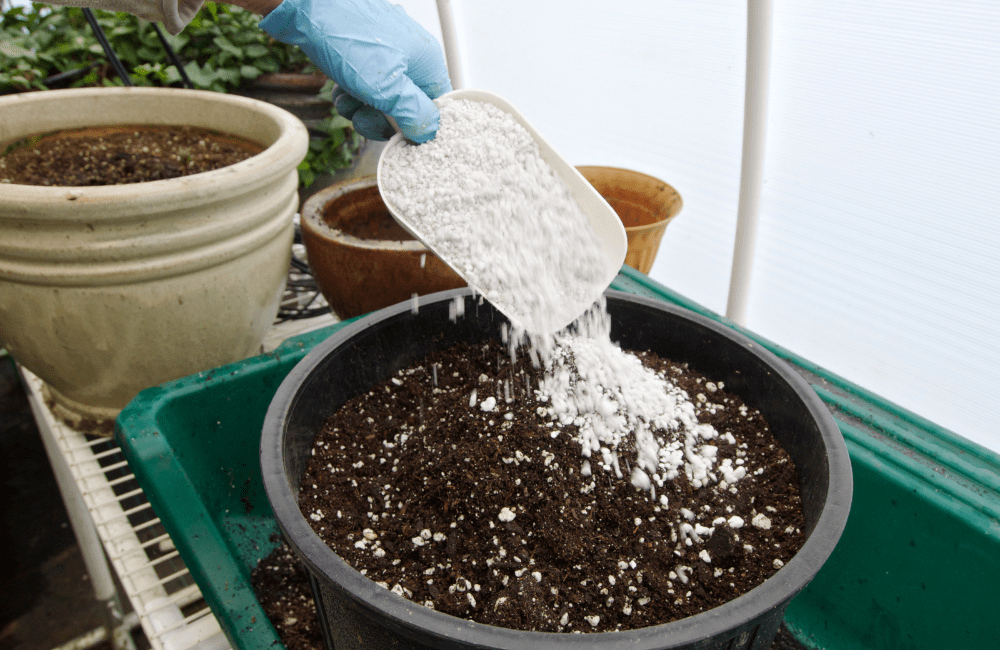
Perlite is a lightweight mineral used to change a potting mix’s physical structure. It can improve air space and drainage in some mixes, but it is neither fertilizer nor a shortcut to faster growth.
What is perlite?
Perlite is expanded volcanic glass heated until it becomes light and porous. In container mixes, the particles help create air spaces that roots need. Perlite itself contributes little nutrition, so the whole growing medium must still suit the plant. The University of Maryland Extension’s potting guide lists perlite among common materials used to alter potting media.
What can it help with?
Where a mix is overly dense, adding an appropriate amount of perlite may improve air movement and drainage. That can lower the time roots spend in saturated conditions, but it cannot make a pot without drainage holes drain. It does not treat an existing root disease. A mix that dries too quickly may need a different balance of ingredients.
Using it for an olive tree in a pot
Some growers combine perlite with soil, coir, rice husk or volcanic aggregate. The amount depends on particle size, the existing mix, pot size and local rain; there is no universal formula. Start by checking how the current pot drains, choose a pot with adequate holes, and test the medium’s moisture between waterings. Position the tree according to its light needs. If you are repotting a large or valuable tree, ask a qualified team to assess the root ball and medium before changing it.
Handling precautions
Perlite can make dust when poured dry. Moisten it lightly and avoid breathing the dust or getting it in your eyes. Do not use it as the only long-term source of support, water and nutrients for a potted tree. Combine it with an appropriate growing medium and adjust to the species.
Frequently asked questions
How is perlite different from vermiculite?
Perlite is commonly used to increase air space and drainage; vermiculite retains more water. The right choice depends on the plant and the rest of the mix.
Can I grow a plant in perlite alone?
Perlite alone provides little nutrition and may not provide the water balance and support a tree needs for long-term container growing. It can be used in some propagation systems with suitable care.
Is perlite safe to handle?
The practical concern during mixing is airborne dust. Moisten it, work with ventilation and follow product handling guidance. Keep loose material away from children and pets.
Related: Choosing soil for olive trees and Root rot and drainage.