At Olive De Casa, choosing an olive tree for a home means looking beyond appearance. We consider each tree’s character, story and relationship to the architecture and garden.
One project particularly close to our hearts brought us together with Wit Little Tree to select and plant olive trees at Yaya Urassaya Sperbund’s home. Yaya and her mother, Mae Pla, chose the trees at our nursery. Wit Little Tree led the landscape design, while our team handled the olive trees. Each tree had its own role and formed part of one garden.
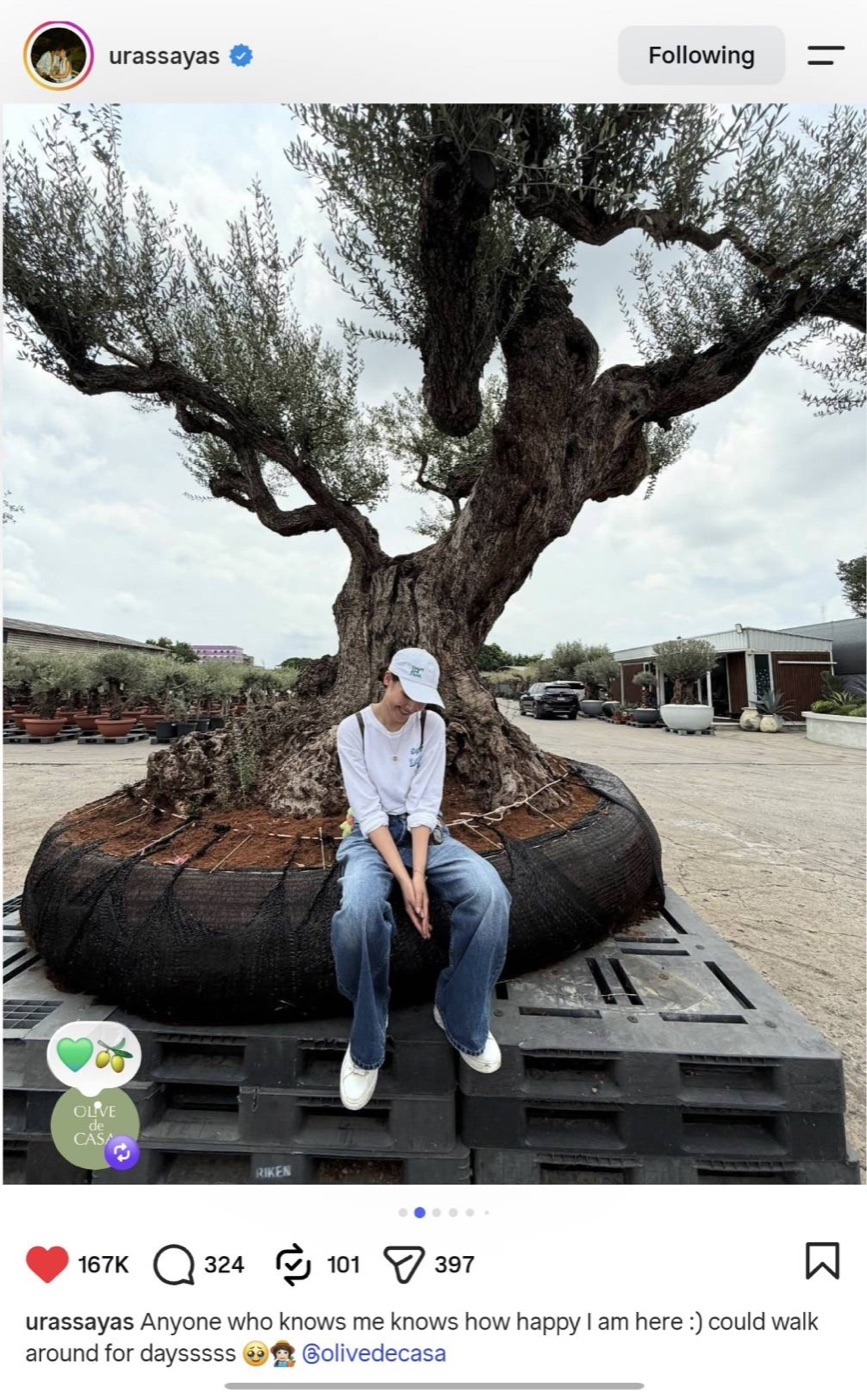
From our nursery to the garden
We considered each tree’s trunk character, branch direction, form and the view from its intended position—not just its size or apparent condition. No two old olive trees have exactly the same shape.
One of the project’s focal trees is a Farga olive more than 1,000 years old. Its trunk carries textures and marks formed over time, and its shape is unique to this specimen. Yaya and her mother selected this tree themselves.
See Yaya choosing the Farga at Olive De Casa on Instagram ↗
Why this tree suited the landscape
We looked at more than age. The trunk’s form, branch direction, canopy balance and the views from the home’s main living areas all informed the selection. This Farga’s trunk and branching structure create different views from different angles, allowing it to serve as a focal tree and connect the architecture with the surrounding landscape.
The best tree does not have to be the most symmetrical. It is the one whose proportions, character and orientation work with the actual space.
Moving and planting a large olive tree
Planting a tree of this age and size takes detailed planning. Our team planned transport and site access, prepared the planting hole and drainage, and considered the planting level and the tree’s orientation from important viewpoints inside the home.
Wit Little Tree led the landscape concept and design. Olive De Casa selected and acclimatized the olive trees, then handled transport, positioning and planting. Together, the teams considered how each tree would relate to the garden as a whole. Sometimes a small change in a tree’s angle can change the way the landscape looks.
See the planting and positioning work on Instagram ↗
Care after planting
Our work continues after planting. We follow the tree’s condition, new growth, canopy and the environment around its base as it adapts to the site. A later photograph shows Yaya beside the Farga, with foliage filling its canopy after planting.
For an old olive tree, the planting day is one part of the project. The work also involves selecting a healthy tree, acclimatizing it, preparing the soil and drainage, and continuing care suited to the site in Thailand.
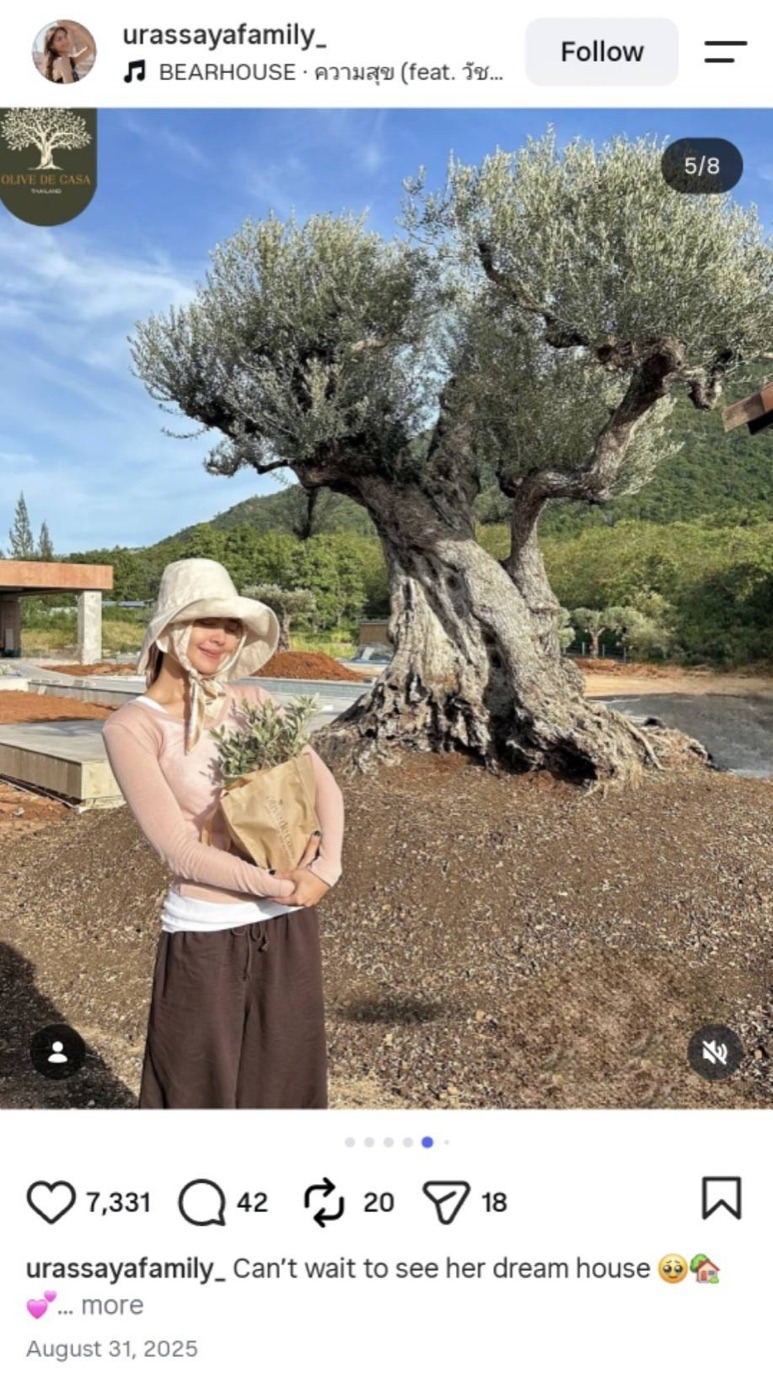
See Yaya with the Farga after planting on Instagram ↗
An olive tree as living heritage
No old olive tree can be replicated. This Farga grew through more than a millennium of seasons before becoming part of a home in Thailand. For us, bringing it into a garden means welcoming living heritage and letting a new chapter in the tree’s story begin with the family who chose it.
The best tree does not have to be perfect. It is the tree that feels as though it belongs in the space.
Frequently asked questions
What makes this Farga tree, more than 1,000 years old, distinctive?
Its large trunk carries natural textures and marks formed over time. This specimen has its own shape, making it a distinctive focal tree for a landscape.
Why was this particular Farga selected for the project?
Along with its age and rarity, we considered this tree’s trunk character, branch direction, canopy balance and how it would look in the actual space. The aim was to connect this specimen with the architecture and overall garden.
What is involved in transporting and planting a large olive tree?
The plan needs to fit the tree and the site. It includes access and lifting equipment, protection for the trunk and roots, planting-hole level and drainage, the tree’s orientation, and support after planting.
What did Olive De Casa and Wit Little Tree each do?
Wit Little Tree led the landscape concept and design. Olive De Casa selected and acclimatized the olive trees, then handled transport, positioning, planting and follow-up care.
Can this old olive tree grow in Thailand’s climate?
A tree can grow when it is healthy and acclimatized, and when light, soil, drainage and aftercare suit the specific site. Suitability should be assessed for the tree and location.
Related: Farga profile (Thai) · Planting portfolio (Thai) · Original article (Thai).