“Japanese pine” can refer to several distinct pines and to shaped ornamental stock sold under local names. The precise species, age and growing method affect its size and care. Ask the nursery for the botanical identification of the individual tree before choosing a position or following a generic schedule. A trained garden tree and a bonsai also need different plans. Our guide to ornamental trees called son explains why market names need checking.
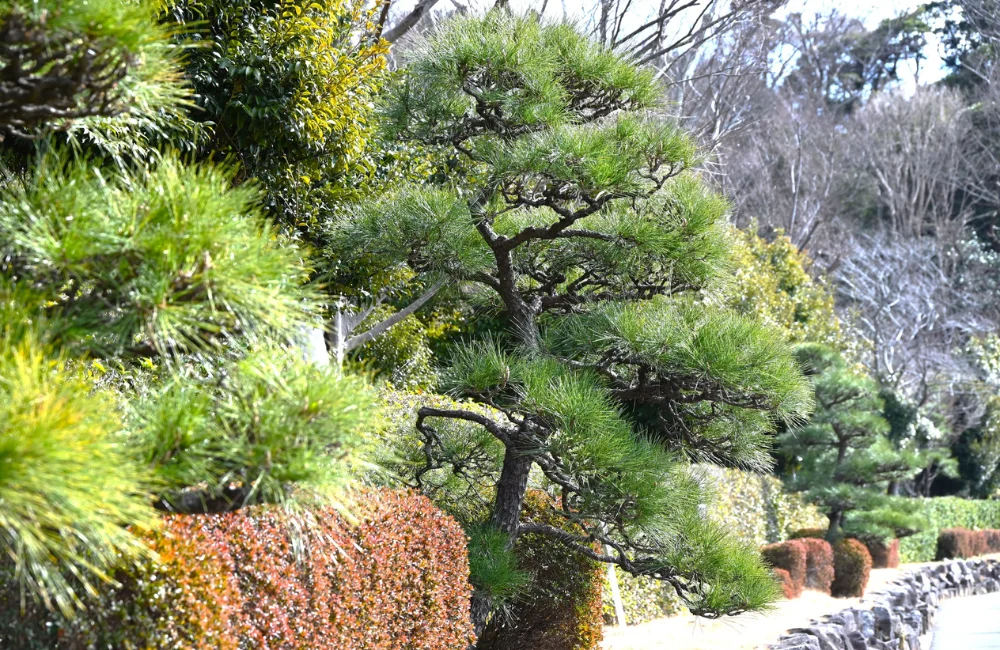
Three named pines and one size label
Japanese black pine. Pinus thunbergii is often used as a bold landscape or trained tree, with paired needles. Its eventual size and site needs should be checked for the exact specimen.
Japanese red pine. Pinus densiflora is another paired-needle pine, usually distinguished by a different overall look and bark as it matures. Do not identify it from a seller’s English nickname alone.
Japanese white pine. Pinus parviflora typically has needles in bundles of five and is used in ornamental plantings and bonsai. Check whether the exact tree is suitable for the climate and growing conditions at your site.
“Dwarf Japanese pine.” This is a size or trade description, not a single botanical species. Check the cultivar, graft and expected mature dimensions on the actual stock.
Five care decisions for the real specimen
- Light and air. Many pines grow best with ample direct light and airflow, but a newly moved tree may need a managed transition. Match the exact species and local microclimate rather than imposing the same 6–8-hour rule on every stock item.
- Watering. Check moisture in the root zone and let surplus water drain. A container can dry at a different rate from the surrounding ground. Neither one nor two waterings every day is a universal rule.
- Growing medium. Use a medium and container or planting site that drains suitably for that tree. Akadama and other mineral ingredients are options, but no single mix is required for every pine or site.
- Fertilizer. Feed according to growth, medium and product instructions; avoid heavy application to stressed roots. Adjust timing to the tree and local growing conditions.
- Pruning and training. Shaping techniques vary by species, age and design goal. Remove clearly dead material and seek skilled advice before extensive candle work or heavy pruning on a valuable tree.
Check stress before trying a treatment
Needle browning can reflect watering, drainage, transplant stress, pests or disease. Inspect the pattern and roots before adding fertilizer or fungicide. Avoid repeated repotting just to change the appearance of the container. If symptoms progress, seek a species-specific diagnosis.
Frequently asked questions
How often should I water a Japanese pine?
Check the actual root-zone moisture, drainage, weather and container. Water when the tree needs it; no fixed daily schedule suits every specimen.
Can it live outdoors in my climate?
Suitability depends on the exact species or cultivar, nursery acclimatization and local site. Assess these before purchase or planting.
How often should it be pruned?
Prune for the tree’s growth and intended form. Advanced pine training is best planned with a practitioner familiar with that species.
When should I repot it?
Repot when the container, roots and health indicate a need, with a species-appropriate plan; do not use a fixed date or disturb a stressed tree without advice.
Does it tolerate both heat and cold?
Different pines have different climate ranges. Identification and local growing experience matter more than the shared name “Japanese pine.”