Brown spots, scorched edges and falling leaves are signs that a plant needs attention, but they are not a diagnosis on their own. A fungal or bacterial disease is possible. So are excess sun, dry roots, waterlogging, concentrated fertilizer and other stress. Observe the pattern and the growing conditions before treating the plant.
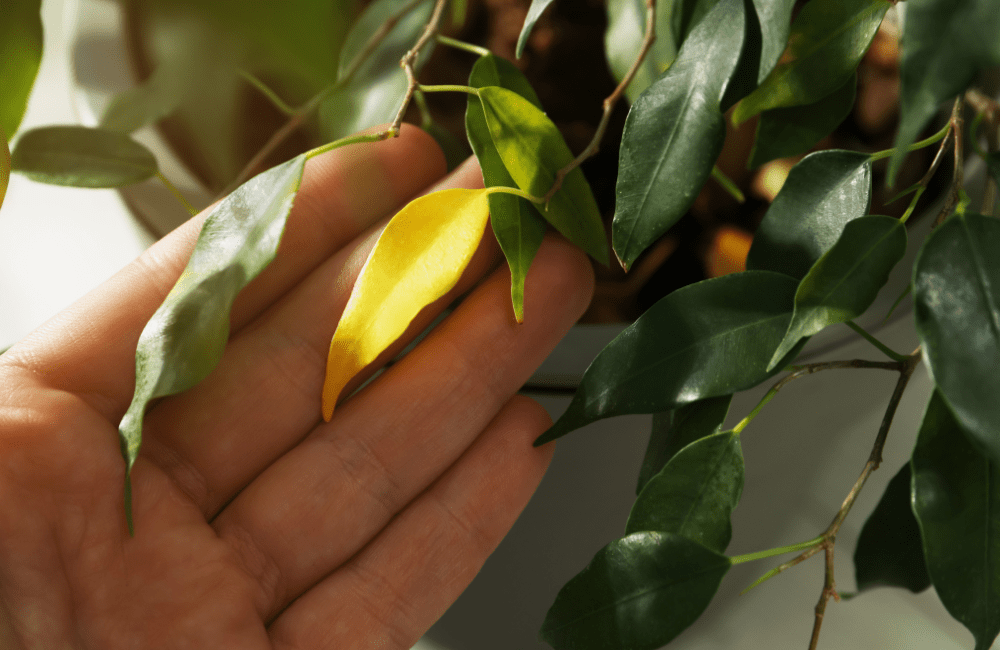
What the leaves can tell you
Look for the shape, colour and position of damage. Are there separate spots that expand and join? Are edges dry on the side most exposed to sun and wind? Are older or inner leaves affected first? Do spots have a yellow margin, or are leaves curling and falling early? Note when the change appeared and whether nearby plants show a similar pattern. A photograph of both sides of a leaf and the whole plant can help a nursery or plant specialist assess it.
Possible infectious and non-infectious causes
Some leaf-spot and blight conditions involve fungi or bacteria. Humidity and splashing water can help certain pathogens spread, but organisms and host plants differ. Heat, intense light, poor airflow, inadequate water, saturated roots and fertilizer salts may produce similar-looking browning without an infectious disease. Our root-rot guide explains why persistently wet roots deserve a separate check. The correct response depends on which of these is happening; a fungicide will not correct sun scorch, and it will not control a bacterial problem by default.
A careful first response
- Check moisture below the surface and whether water can leave the pot or planting hole. Correct a persistently dry or waterlogged root zone without swinging between extremes.
- Compare the current light and airflow with the plant’s needs, particularly after it has been moved or repotted. Change exposure gradually when possible.
- Remove badly damaged leaves or fallen debris where an infectious problem is suspected, and clean tools between plants. Avoid stripping a large amount of healthy foliage from an already stressed tree.
- If the pattern is spreading or the plant is valuable, seek a diagnosis for the specific plant. Use any registered treatment only for a confirmed or well-supported cause and follow its label.
Reduce repeat problems
Choose a suitable position and a pot or soil profile with appropriate drainage. Water the root zone according to weather and plant needs, and avoid repeatedly wetting foliage where a diagnosed disease is favoured by moisture. Inspect leaves periodically, especially after heavy rain, a move or a change in care. Fertilize only when needed; feeding a stressed plant is not a universal remedy.
Frequently asked questions
Will a brown leaf turn green again?
Dead tissue does not regain its colour. The goal is to prevent new damage and support healthy new growth after the cause is addressed.
Can this spread to another plant?
Some infectious problems can spread to susceptible hosts; sun or watering injury cannot. Diagnosis matters before assuming every brown spot is contagious.
Will new leaves grow after damaged ones are removed?
A healthy plant may produce new growth in suitable conditions, but timing and extent depend on its species and condition. Avoid removing more foliage than necessary.