An olive tree can give a garden a distinctive silhouette and silver-green foliage. Before planting, consider the individual tree as well as the site: its mature scale, available light, growing medium, drainage, and access for delivery and care.
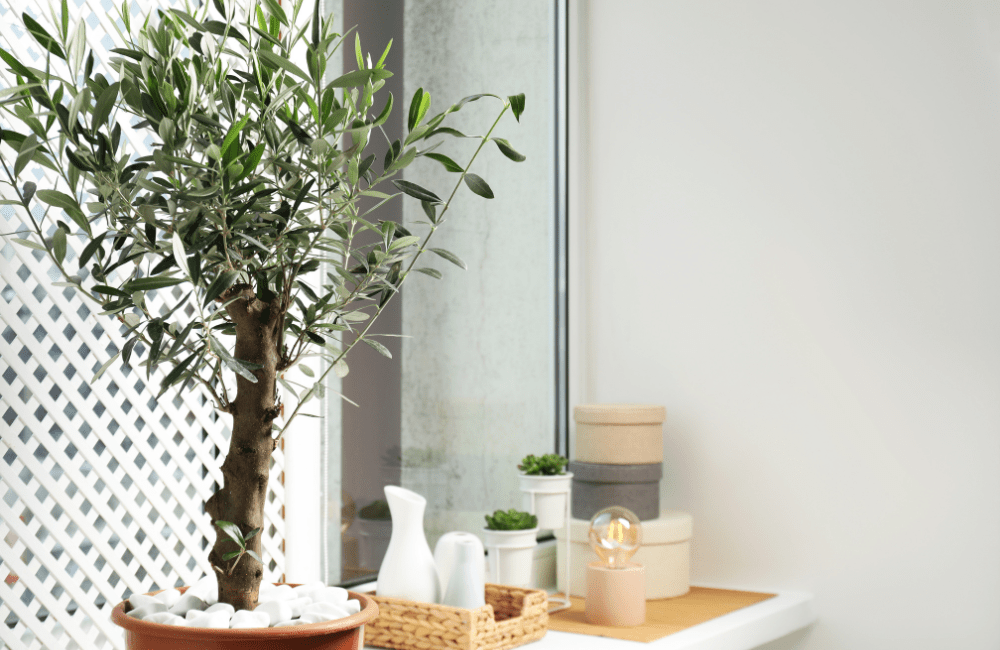
1. Choose the tree for the space
Look at the tree’s dimensions, canopy, root ball, and condition. A smaller tree and a large specimen create very different requirements for access, support, and future growth. Ask what preparation and care the individual tree has received.
2. Assess the soil and drainage
Olive trees need a site or growing medium that drains excess water. An open mix may include soil, coarse sand, and volcanic material; the exact mix should be chosen for the planting site rather than treated as a fixed recipe. Avoid planting where water collects and stays after rain.
3. Select an appropriate pot, if using one
Choose a stable container that suits the tree’s root ball and canopy, with adequate drainage holes. Consider the load when it is watered and where the excess water will go. Do not rely on a layer of loose material at the bottom as a cure for a poorly draining mix.
4. Keep the root ball and planting level in mind
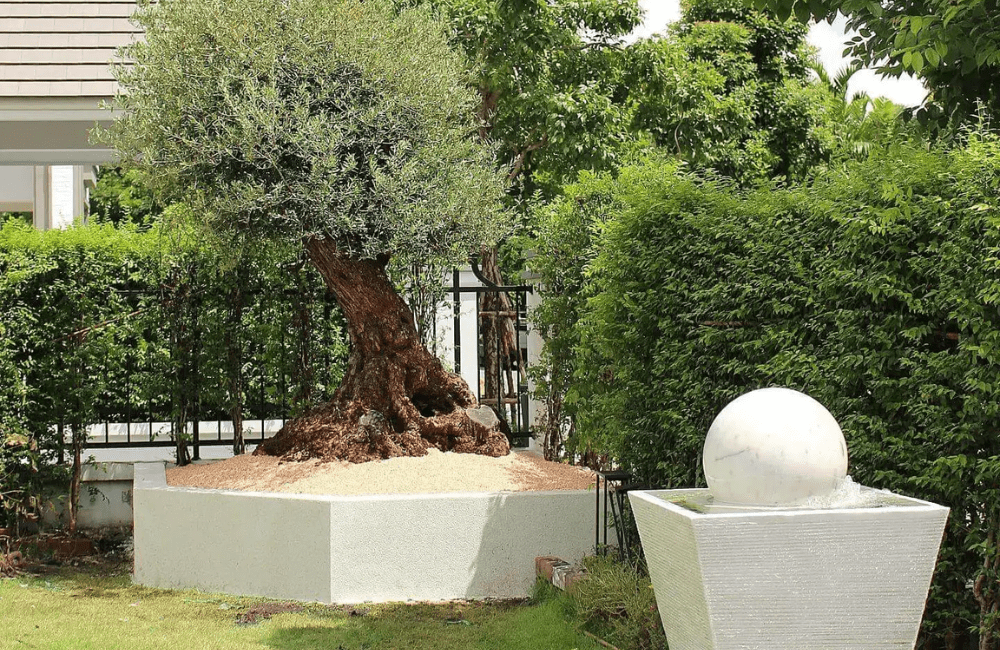
Handle the root ball carefully. Set the tree at a suitable level so the root crown is not buried more deeply than it was in its previous growing medium. Backfill appropriately and water after planting to settle the soil. A large specimen may need a site-specific lifting, anchoring, and aftercare plan.
5. Choose a bright position
Olives prefer a sunny site. Assess the actual light throughout the day, nearby buildings, and the tree’s prior growing conditions. A tree moved from a different setting may need an individual transition plan.
After planting
Check soil moisture instead of following a fixed watering interval, inspect drainage, and monitor the canopy. Watch for pests or unusual marks under the leaves and on branches. Pruning and feeding should fit the tree’s condition rather than a single calendar rule. The team can discuss availability of planting and aftercare for your location.
Common questions
Can an olive tree grow indoors?
A bright indoor position may suit a small tree temporarily, but not every room has enough direct light. Check the light, airflow, and how slowly the potting mix dries. Ask about the needs of the individual tree before placing it indoors.
Will an olive tree produce fruit?
Fruiting depends on the cultivar, pollination, climate, light, and care. A tree chosen for its ornamental form should not be assumed to produce a harvest.
How often should I water it?
There is no useful weekly rule for every tree. Check the moisture of the root zone and account for the pot or soil, rainfall, heat, and stage of establishment. Allow excess water to drain.
Related: Choosing Soil for Olive Trees · Contact Olive De Casa.