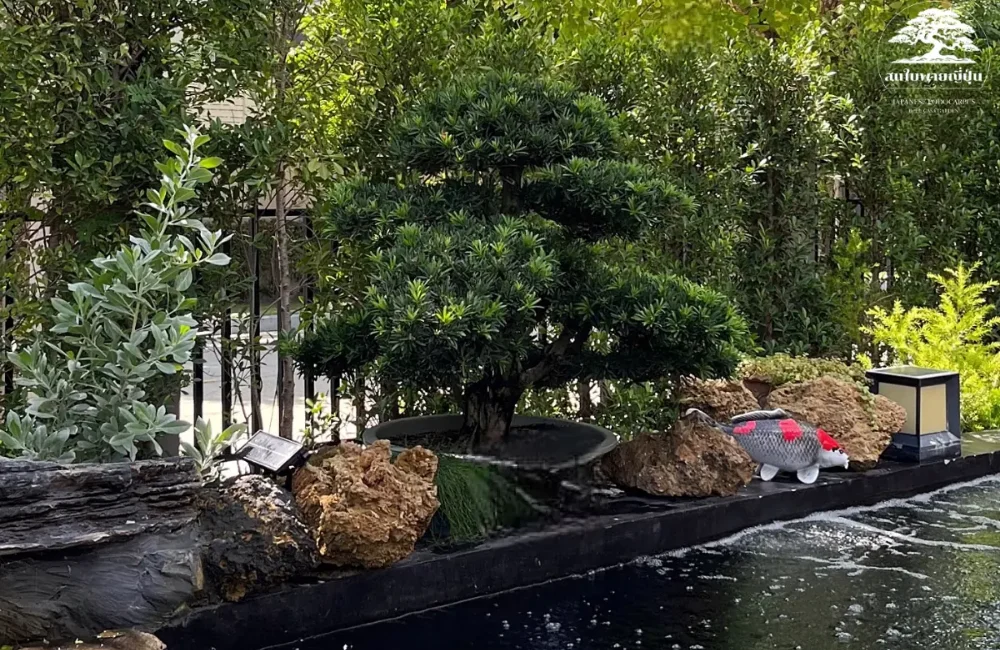
With its slender, dark green leaves and naturally tidy canopy, podocarpus brings structure to a garden without demanding frequent pruning. Here is how to prepare the soil, help a newly planted tree settle in, keep the foliage healthy and propagate a plant of your own.
What is podocarpus?
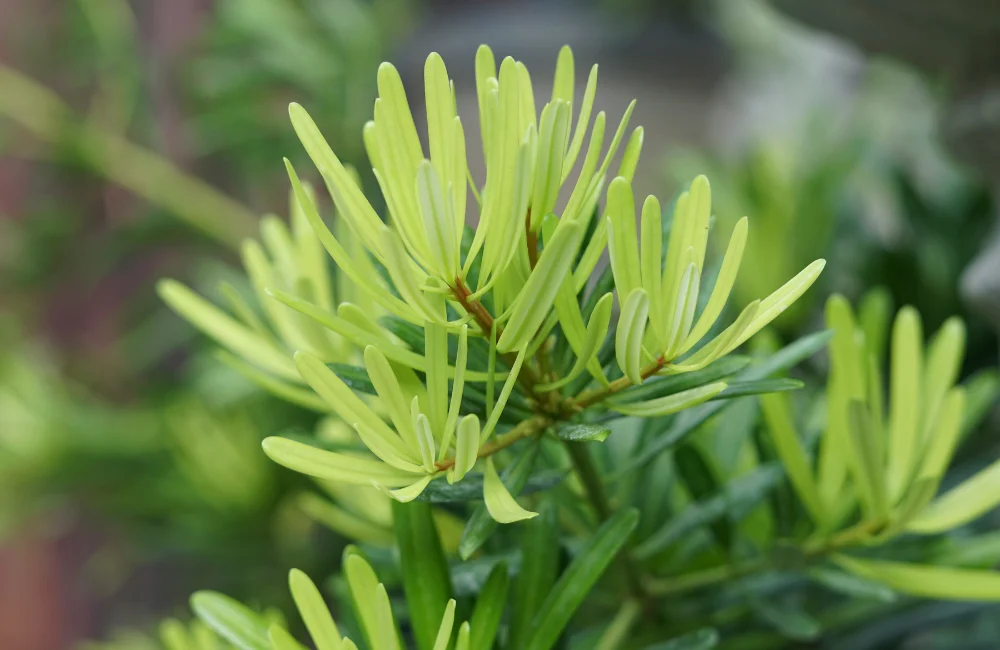
The podocarpus commonly grown in Asian gardens is an evergreen with glossy, narrow leaves. It suits Japanese-inspired and contemporary landscapes and can also be grown as a privacy hedge. Some households in Thailand also regard it as an auspicious plant associated with stability and good fortune.
How to plant podocarpus
- Prepare free-draining soil. Sandy loam is a good starting point. Chopped coconut husk or perlite can help keep the mix open, and well-rotted manure can add organic matter where appropriate.
- Give the roots room. Dig a hole wider than the root ball. Set the tree at its original depth rather than burying the base of the trunk.
- Backfill and water in. Firm the soil gently around the root ball and water thoroughly. Avoid compacting the soil or letting water pool around the roots.
- Protect new plantings from intense sun. During very hot weather, temporary shade for the first week or two can help a newly planted tree settle in.
How to keep podocarpus healthy year-round
- Light: Choose a site with a half day to a full day of sun. Too much shade can lead to sparse foliage.
- Water: Check the top layer of soil regularly, especially after planting and in hot weather. Water when it begins to dry, and adjust to rainfall, container size and drainage. Don’t water on a fixed daily schedule if the soil is still damp.
- Feeding: Where the plant and soil need it, consider well-rotted manure or compost every two to three months. A balanced fertilizer is another option; follow the product label.
- Pruning: Remove dry or diseased branches. Trim lightly as needed to shape the canopy and encourage a denser outline.
Three ways to propagate podocarpus
- Seeds: Seed-grown plants can develop a strong taproot, but growing from seed is a slower option.
- Air layering: Select a partly mature branch, remove a narrow ring of bark and wrap that area with moist coconut coir. Wait for a substantial root system to form before separating and potting the branch. The new plant retains the parent’s characteristics.
- Cuttings: Take a healthy shoot or branch cutting and place it in a clean, moisture-retentive growing medium that also drains. Success can vary; cuttings may establish less reliably than air layers.
Find a podocarpus for your garden
Olive de Casa selects podocarpus for shape and character, alongside imported olive trees. Our team can help you choose a tree for your space and advise on planting and aftercare. Contact Olive de Casa to discuss your project or ask about delivery.
Frequently Asked Questions
How fast does podocarpus grow?
It typically grows slowly to moderately, producing new shoots and gradually filling out. That makes its form relatively easy to maintain with light pruning.
Why are the leaves turning yellow or dropping?
Overwatering and poor drainage can reduce oxygen around the roots and contribute to root rot. Compacted soil or a nutrient problem may also be involved. Check the soil and watering routine before adding fertilizer.
Can podocarpus roots damage a house foundation?
Podocarpus is generally not regarded as an aggressively spreading tree, but no tree is risk-free beside a building. Allow room for the mature tree and check foundations, drains and other buried services when choosing the site.
Further reading: University of Minnesota Extension’s tree-planting guide.