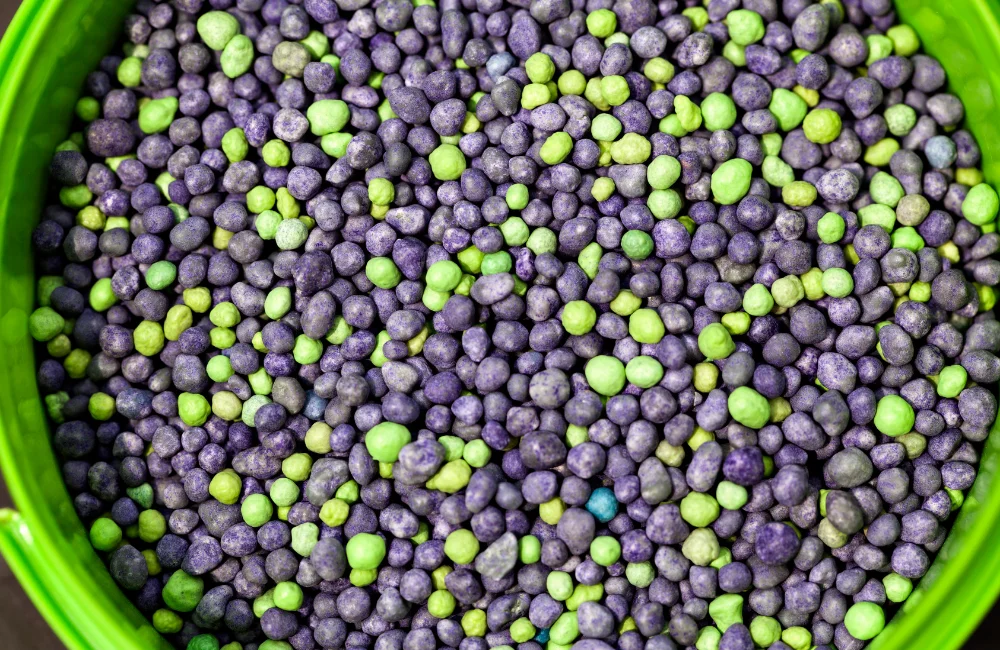
Slow-release fertilizer can make feeding more manageable. The key is to choose a formula and release period suited to the plant, then apply the right amount for its size and growing conditions. Here is what the numbers mean and how to use these products in pots or in the garden.
What is slow-release fertilizer?
Slow-release fertilizers supply nutrients over time. The coated granules discussed here, often referred to as controlled-release fertilizer and sold under brands such as Osmocote, are one type. Moisture enters the coating, dissolves nutrients inside the granule and allows them to move gradually into the growing medium. Release can last several months depending on the product and conditions. This can reduce nutrient loss and the risk of root burn compared with a large dose of a fast-release fertilizer, but applying too much can still damage roots.
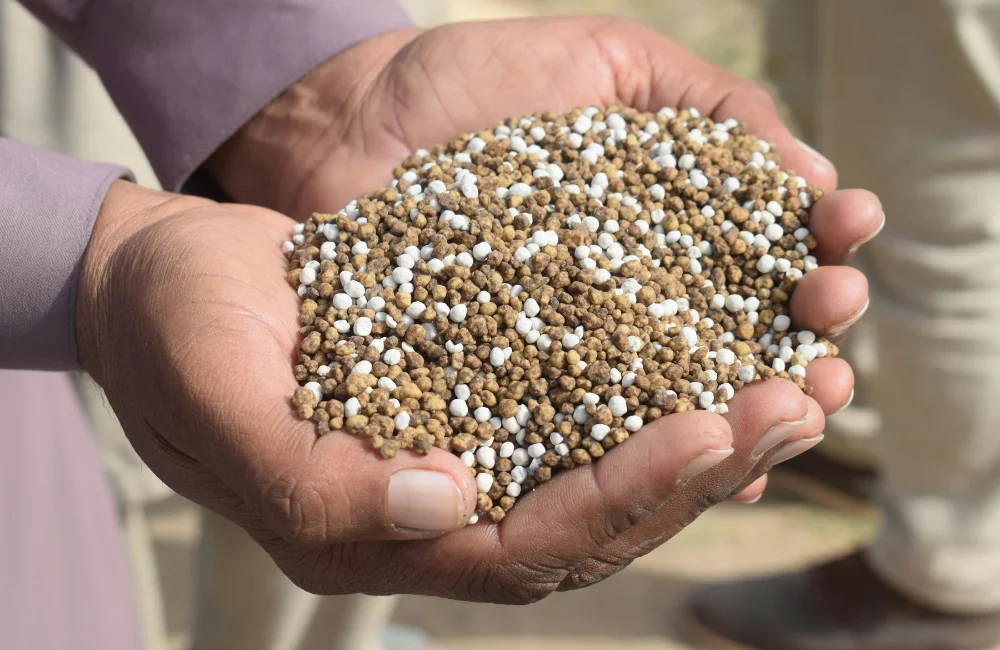
Compare 13-13-13, 15-15-15 and 16-16-16
NPK numbers indicate the product’s nutrient analysis: nitrogen, phosphate and potash, in that order. These three blends are all balanced in ratio. The difference is concentration, not necessarily how long a product feeds the plant.
13-13-13: a general-purpose starting point
This balanced formula can suit many foliage plants, ornamentals and container plants when their care instructions call for it. Some products feed for around three months; use the release period and application rate printed on the specific label.
15-15-15: a more concentrated balanced formula
This supplies more of each labeled nutrient for the same weight than 13-13-13. It may suit actively growing plants with a higher nutrient demand. Do not assume that a stressed or recovering plant needs more fertilizer; check water, light and root health first.
16-16-16: the most concentrated of these three
Consider this blend for established plants with higher nutrient needs, rather than assuming a higher number is better. Match the dose to the plant and container. A higher NPK number alone does not guarantee more flowers, fruit or stronger growth.
How to apply slow-release fertilizer
- Top-dress. Scatter the granules evenly over the soil surface, away from the stem or trunk, then water as directed on the label.
- Mix into the growing medium if the label permits. For planting or repotting, distribute the recommended amount evenly. Avoid a concentrated layer in direct contact with roots.
- Cover lightly if appropriate. For products intended for shallow incorporation, spread the granules in the top layer and cover lightly so they are less likely to wash away. Avoid damaging surface roots.
- Measure rather than guess. Use the label rate for the plant and pot size. Do not add a second dose to compensate for yellow leaves without first checking other causes.
The takeaway
Start with the plant’s needs, not the largest NPK number. Use the right dose and reapply at the labeled interval. Fertilizer works alongside appropriate light, watering and drainage; it does not replace them.
Frequently Asked Questions
How often should I apply slow-release fertilizer?
Common products are rated for about three or six months, but release time depends on the formulation and conditions. Follow the label rather than assuming all granules last the same length of time.
Can I use it for olive trees and ornamental plants?
Yes, when the formulation and rate suit the plant. For a potted olive or podocarpus, pay particular attention to drainage and the label dose for the container size.
Can too much slow-release fertilizer kill a plant?
An excessive or repeated dose can allow salts to build up in the growing medium, damage roots and weaken the plant. Use the recommended amount and do not apply it more frequently than instructed.
Can I use it alongside liquid fertilizer?
Sometimes, if there is a specific nutrient need and both products permit it. Count both sources when planning the total dose. Avoid adding liquid feed routinely on top of a full dose of slow-release fertilizer.
Further reading: University of New Hampshire Extension’s guide to fertilizers and potting soil.